
AI Integration Services & Automation
We build AI assistants and automations connected to your CRM, ERP, e-commerce platform and website. One team from discovery to build and upkeep.

AI Integration & Automation: scope and approach
We don't add AI as a separate tool; we build it into the systems your business already runs on. We hand repetitive work over to workflows we build with n8n, set up AI assistants that work with your own data for your website or your team, and add large language model (LLM) integrations to your existing software (CRM, ERP, e-commerce, mobile apps). First we work out together which tasks are worth automating, then we handle the build and testing, with optional post-launch maintenance. We are model-agnostic: we recommend the model and hosting option that fit the project's needs, budget and data privacy requirements. Codey, the quote assistant on this site, is an AI assistant built by our team.
What we do with AI
Besides adding AI to your existing software, we work in four areas.
- AI Workflow Automation with n8nHand repetitive work over to n8n workflows: forms, email, CRM, spreadsheets and reporting, all connected.
- Custom AI Assistant DevelopmentAn AI assistant for your website or your team that answers from your own information and collects requests.
- Local AI Setup (On-Premise LLM)Open-source AI models installed on your own servers, working without your data leaving the company.
- AI Consulting & RoadmapLet's work out where to start: process review, priority use cases and a roadmap you can act on.
Technologies we use

Try the assistant on this site
Codey, in the bottom-right corner, is an AI assistant our team built to collect quote requests. It clarifies your project with a few questions, summarizes your answers and passes the request to our team. The assistant we build for you works in a similar way, shaped around your own business and data.
Get a quote with CodeyHow we work
- Discovery
In a free initial consultation we listen to how you work and which systems you use, and decide where AI will help first.
- Quote
A clear quote listing the scope, the integrations and the items not included (API usage, hosting, taxes) line by line.
- Build and test
We build the workflows and the assistant, test them with real examples and launch together with your team.
- Maintenance
After launch we monitor the results and keep models and workflows up to date with optional maintenance.
Data and privacy
- Before the build we document the data flow: which data goes to which service, where it is stored and who can access it.
- We mask personal data the model doesn't need before it is sent.
- We tell users clearly that they are talking to AI.
- We recommend the model and hosting option based on your data privacy requirements, and can install the model on your own servers.
- Legal and KVKK processes are reviewed and approved by our partner law firm; this is included in the package.
Who it is for and what it solves
The question businesses ask about AI is rarely which model to use. It is where in the work they can use it, and at what risk. This page is written for small and mid-sized businesses and agencies that want to add AI to software they already run, automate repetitive work, or offer customers an assistant that answers from their own information. The aim is not a technology showcase; it is to let your team do a job it actually spends time on with less effort.
We work through pilot projects: one task, a success measure written down in advance, testing on real examples and a limited group of users. If a pilot does not meet expectations, saying so and stopping is a legitimate outcome of the process. Learning on one concrete task before committing to a large transformation plan protects both the budget and your team's confidence.
Automation, the AI assistant and consulting each have their own sub-pages. Here we cover the common ground underneath them: model integration into existing software, preparing the data, security boundaries, cost control and how a pilot runs. For agencies, we can take on the workflows and assistants that connect to a client's systems as a development partner; in that case we put in writing, from the start, whose behalf the data is processed on.
What we do in AI Integration & Automation
Model integration into existing software
We add functions such as summarizing an incoming request in your CRM, drafting product descriptions in an e-commerce panel, or letting people query an ERP record in plain language. Instead of leaving model output as free text, we prefer turning it into a structure your software can process and validate field by field. We design the fallback behavior up front, so your software keeps working as before when the model is unavailable.
Document extraction and classification
From semi-structured inputs such as invoices, order forms, emails and support requests, we extract fields and sort items into categories. Extracted values are checked against business rules, for example whether a total matches the sum of its lines or a date is valid. Records the system is unsure about go to a person for approval instead of being processed automatically.
Search over your own knowledge (RAG)
We turn documents, FAQs and product information into a searchable knowledge base. Answers are grounded in the sources found and, where possible, point back to them. How the knowledge base stays current, and who may access which document through permission-based filtering, are part of the design.
n8n as the automation backbone
We build cross-application flows with n8n, with error notification, retries, approval steps and run logs built into the flow. n8n can run on your own server or in your cloud account. The two carry different responsibilities for data, updates and upkeep, and we choose together based on your needs.
Security, privacy and an audit trail
API keys are kept in secrets management, not in code. Personal data is masked before it reaches a model service whenever it is not needed. Who queried what, and when, is recorded. An assistant that can use tools is never given more permission than the person using it, and we put limits in place against instructions hidden inside a document or an email steering the assistant.
Tracking quality, cost and model changes
We assemble a test set from real examples and measure again with the same set whenever the model or prompt changes. We monitor usage cost and can set a ceiling. Because model providers can retire versions, we take care to build in a way that makes switching models easy.
What affects the price
Number and complexity of use cases
A pilot is built around one task. Each new use case is a separate scope with its own data, rules and testing; several use cases appear as separate lines in the quote.
Systems to connect and API quality
Connecting to a well-documented API is very different from working around a closed system. The number of systems, and whether access permission can be obtained for each, affects the labor.
State of the data
Scattered, duplicated or outdated documents take extra effort to prepare for a knowledge base. The language, format and cleanliness of the data determine how large the preparation work is.
Reliability and audit requirements
Human approval steps, the size of the test set, logging and an audit trail define the scope of quality assurance. As the cost of an error rises, so do these items.
Model and hosting choice
A commercial model API is billed by usage, and that fee is paid to the model provider. Running a model or n8n on your own server brings hardware and upkeep responsibility. These costs are shown separately from setup and development labor, and taxes are stated separately as well.
Usage volume
Daily request counts, concurrent users and the size of the documents processed directly affect recurring costs. The volume measured in the pilot gives a realistic basis for the budget at scale.
Monitoring and maintenance
Changing model versions, refreshing the test set and updating the systems the flows depend on all need regular attention. Maintenance is optional and planned separately from the build labor.
An exact price is given once the scope is clear. In a free initial consultation we listen to your needs, then prepare an itemized quote. Write to us for a free consultation
Example projects
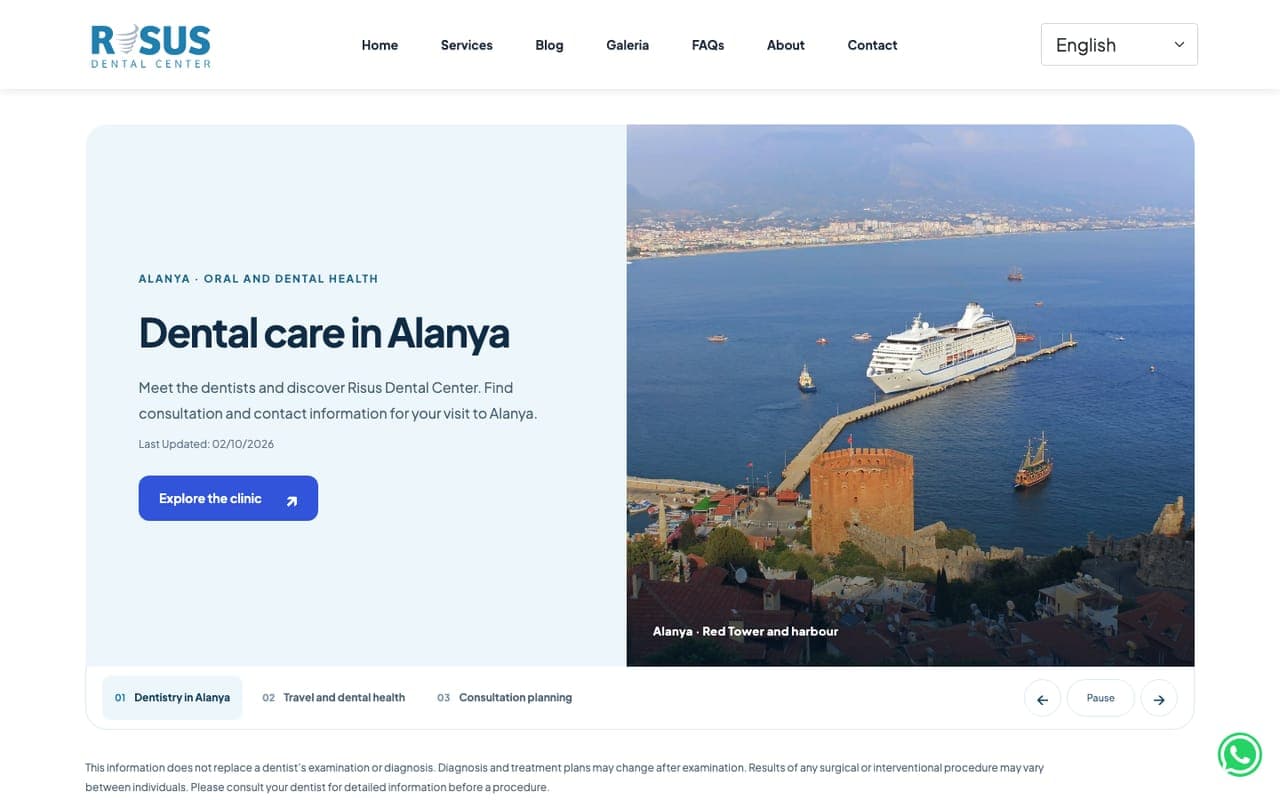
The projects in our reference list are web and mobile work; none is presented as an AI integration project. Still, the systems an assistant or automation connects to often look like them: the multilingual Risus Dental Center site with quick WhatsApp contact, Kayram Auto's quick application flow, Fergo's dealer login and its use of Supabase. Codey, on this site, is an AI assistant our team built and it runs on Anthropic's Claude model.
Healthcare
Risus Dental Center
Multilingual Clinic Website
Multilingual website for Risus Dental Center in Alanya: treatment services, blog, gallery, FAQ and quick WhatsApp contact.
Visit the live site Risus Dental Center (opens in a new tab)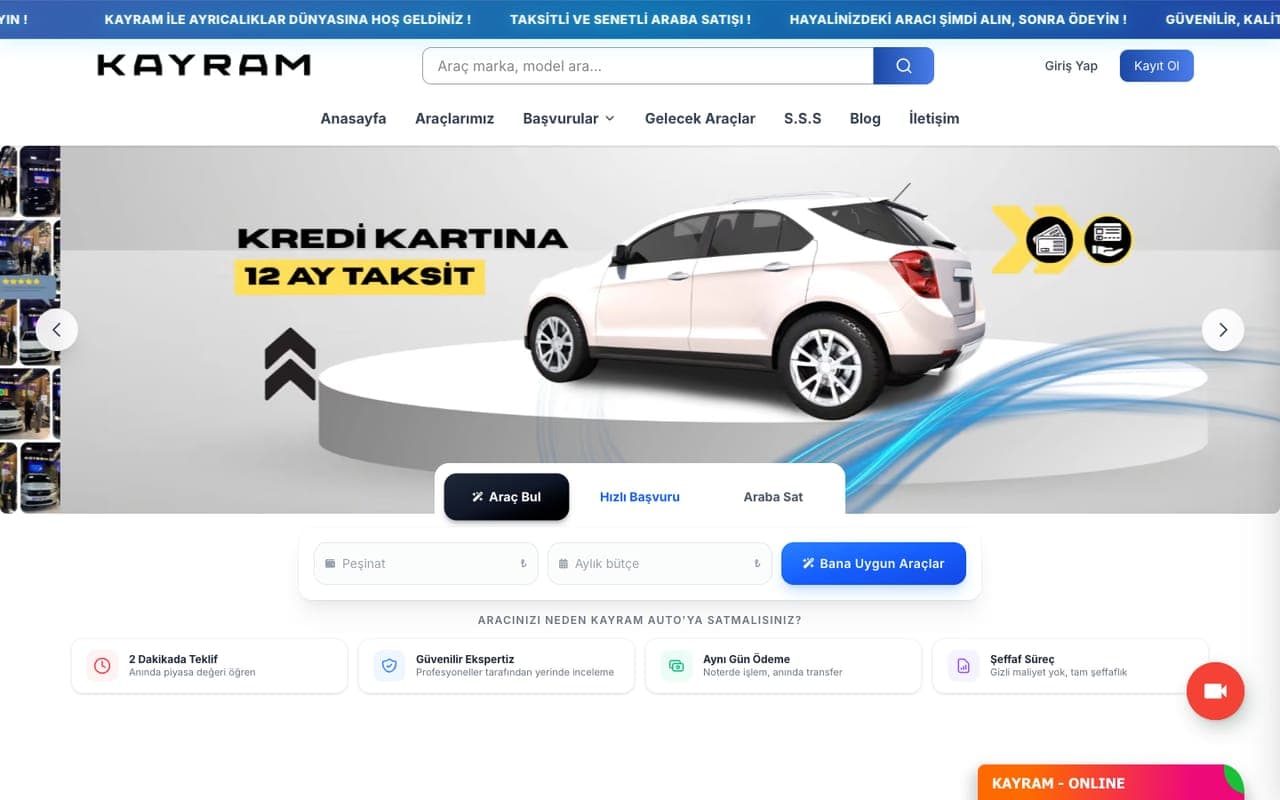
Automotive
Kayram Auto
Car Financing & Sales Platform
Web platform built for Kayram Auto, a dealer selling cars on credit and instalments: a large vehicle portfolio, brand and model pages, budget-based car finder and a quick application flow.
Visit the live site Kayram Auto (opens in a new tab)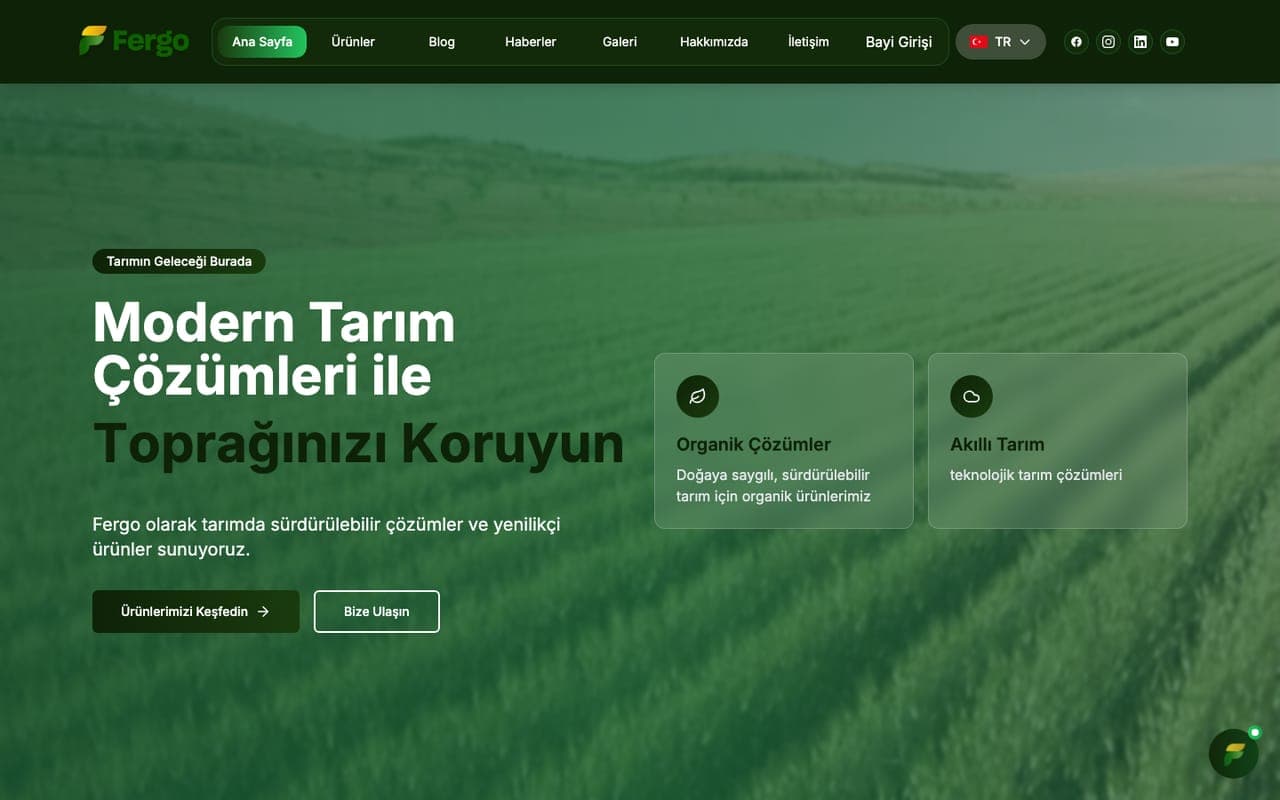
Corporate
Fergo
Corporate Website
Corporate website for Fergo, an organomineral fertiliser producer: product catalogue, blog and news modules, dealer login and a multilingual structure.
Visit the live site Fergo (opens in a new tab)
Frequently asked questions
What is a pilot project, and why not start with a full build?
A pilot tries one task with a limited group of users against a success measure written in advance. The quality of AI output often cannot be predicted without trying it on your real data; a pilot reduces that uncertainty at a small cost before a larger investment. If the result is not good enough, you can stop without having expanded.
Is n8n the right tool for every job?
No. n8n is a very good fit for flows that move data between applications with a moderate amount of logic. For work with very high request volumes, millisecond response expectations or complex business rules, writing code directly may be healthier. We choose by the nature of the job and share the reasoning with you.
How do you measure the quality of an assistant's answers?
We build a test set from real questions and documents and review the answers together with your team. You set the acceptable error level, and for critical subjects we recommend human approval. Because we measure again with the same set whenever the model or prompt changes, you can see whether an improvement is real.
Our staff already use general chat tools. How should we handle that?
First, write down which data must never be pasted into such tools. Then offer an in-house option that does the same job in a controlled way; that makes the rule easier to follow. The legal framing of the rule is set with the partner law firm we work with in parallel (included in the package), and we implement the technical side.
Does the model provider store our data or train on it?
That depends on the provider, the plan and the terms you sign, and it changes over time. So before recommending a provider we review its current data-handling and retention terms with you, and where needed we steer toward an option with stricter terms or a model running on your own servers. We do not make commitments on a provider's behalf.
Does it make sense to run an open-source model on our own servers?
It can, if keeping data inside the company is a serious requirement. In return you take on hardware or hosting costs, setup and upkeep, and often a more limited capability than the strongest commercial models. For most small and mid-sized businesses an API approach with masking is simpler; we suggest comparing the two in the pilot.
What kinds of work do you not recommend AI for?
We do not recommend it for work that needs exact calculation, work whose rules are fully known and can be solved with plain automation, or work that lets irreversible decisions be made without human oversight. Legally binding decisions are among these. If AI is not needed, we will point you to a simpler and cheaper solution.
What happens if the model provider retires a version we use?
Providers can retire older model versions on a schedule. So instead of embedding the model name throughout the code, we manage it from a single configuration and validate any new version against the test set. Under optional maintenance we can follow these transitions on your behalf.
Can an AI assistant connect to our existing systems?
It can connect to most systems that offer an API or webhooks: CRMs, ERPs, e-commerce platforms, databases, email and spreadsheet tools and your own software. During discovery we agree on how each system will be connected and where the limits are.
Where is our data processed, and how do you handle privacy?
Before the build we document the data flow: which data goes to which service, where it is stored and who can access it. We mask personal data the model doesn't need before it is sent, and we tell users clearly that they are talking to AI. We recommend the model and hosting option based on these requirements and can install the model on your own servers. Legal and KVKK processes are reviewed and approved by the partner law firm we work with in parallel; this is included in the package.
Which AI models do you use?
We are model-agnostic. Depending on the project we recommend commercial models such as Claude, GPT or Gemini, or open-source models that can run on your own servers. Codey, the assistant on this site, runs on Anthropic's Claude.
How long does a build take?
It depends on how many systems need to be connected, the state of the data and the testing scope. After the initial consultation we share a step-by-step timeline and a clear quote.
How is the cost calculated, and what isn't included?
The quote covers setup and development work. AI model usage (API) fees, server or n8n hosting costs and taxes are listed separately, line by line. Post-launch maintenance is optional and planned separately.
Where should we start?
We suggest starting with the repetitive task your team spends the most time on. In a free initial consultation we listen to how you work and agree on where AI and automation will help first.
Related services
- ERP & CRM SolutionsManage your business processes on one platform, strengthen customer relationships and increase efficiency with custom ERP and CRM software.
- Digital TransformationWe provide end-to-end consulting for your digital transformation: strategy, process digitalization, data and cloud migration.
- Cloud ServicesWe deliver secure and scalable cloud solutions on AWS, Google Cloud and Azure.
Looking for a broader digital transformation plan? Digital Transformation Consulting
Want to check for yourself how your site appears to search engines and AI search tools? Try our free SEO and GEO tools.