
E-Commerce Website Development
We build professional, sales-focused e-commerce platforms with Shopify, WooCommerce and custom development.

E-Commerce Solutions: scope and approach
We provide comprehensive e-commerce solutions to help your business achieve its online sales goals. We create the most suitable platform with Shopify, WooCommerce and custom development options. We offer end-to-end e-commerce services including payment system integration, inventory management, shipping tracking, customer panel and SEO optimization. We deliver conversion-focused user experience design and performance optimization.
Technologies we use
Who it is for and what it solves
Selling online takes more than opening a shop window. People have to find the product, trust the store, pay without friction, have the order connect to stock and shipping, and not be left alone after the sale. At Codeativ we build e-commerce stores on Shopify, WooCommerce or custom development, connect payment systems and rebuild existing stores.
This page is for small and mid-sized businesses opening a first online store or expecting more from the one they have, and for agencies running e-commerce projects for their clients. Most conversations start with which platform to pick, but the order that works is the reverse: first what you sell, how many products you have and which systems you need to talk to, then the platform. Get that order wrong and you may hit the platform's limits some time later.
Below we describe what we do, from platform choice to payments, SEO and performance. We give no figures or deadlines, because a store's scope is set by your product structure, your integrations and the way you operate, and any number given before those are discussed is a guess.
What we do in E-Commerce Solutions
Platform choice: Shopify, WooCommerce or custom
All three have their place. Shopify suits stores that want to start quickly and leave hosting and security to the platform, in exchange for the platform's subscription and app costs. WooCommerce runs on WordPress and is flexible, but keeping it maintained and updated takes more effort. Custom development, for example with Next.js, makes sense where a ready-made platform struggles, such as unusual pricing rules, dealer structures or heavy integration, but it costs more effort up front and to maintain. We give our recommendation in writing, with the reasons.
Payment systems
We connect payment providers such as Stripe, PayPal, iyzico, PayTR and Paynet, and we support credit card, bank transfer, cash on delivery and instalment payments. Whether a provider is available for your company type and country, and how its application and approval work, is up to the provider, so we suggest checking this at the very start. We build and test the integration. Our preference is that card details are never held on the store's own server and are entered in the payment provider's secure area.
Products, stock and order flow
We set up the category and variant structure, stock tracking, order statuses, shipping information passed on to the customer, and an account area where customers see their order history. If you need a link to accounting, ERP or warehouse systems, we settle whether it is feasible and what it involves during discovery.
A store experience built for conversion
We design product pages, search and filtering, the cart and checkout steps to work comfortably on mobile. Fewer steps, clear error messages and visible delivery and returns information are small details that affect the outcome. We do not promise a conversion lift; we set up measurement and follow what works with data.
SEO, performance and rebuilding an existing store
For category and product pages we work on titles, descriptions, structured data, image sizing and page speed, and we take care that filter pages do not produce duplicate content. If you are rebuilding an existing store, we plan the transfer of product, customer and order data, the redirects from old addresses to new ones and the speed improvements.
Process
Discovery
We listen to what you sell, how many products you have, how you ship, which payment methods you want and which systems you must connect to. We also look at where your product data lives and how it is organised, which is often the detail that moves the scope the most.
Platform recommendation and quote
We recommend Shopify, WooCommerce or custom development with reasons, and write down the running costs and limits of each option. Then we prepare an itemized quote.
Store structure and design
We prepare the design for the category tree, product page, cart and checkout, and show it to you for approval before development starts.
Setup and development
We import product data, configure payment and shipping, and build the integrations. You can see the working store on a test address.
Test orders
In the payment provider's test mode we run orders, refunds and cancellations, and check devices, speed and an SEO checklist. We insist on an end-to-end trial order before live payments are switched on.
Launch and the first period
We switch on live payments, set up Google Analytics 4, Google Ads conversion tracking and Meta Pixel if you want them, and show you how the admin panel works. We suggest watching orders and errors together during the first weeks.
What affects the price
Platform choice
A ready-made platform usually needs less development effort but brings monthly subscription and app costs. Custom development takes more effort at the start and gives you full control over the rules. The difference shows up in how one-off and running costs are split.
Number of products and data quality
A few dozen products and thousands of products with variants are not the same job. Whether product information sits in a tidy table or in scattered files, and whether the images are ready, changes the import effort noticeably.
Payment methods and providers
Taking cards through one provider differs from handling several providers, instalments, cash on delivery, sales abroad and multiple currencies. Providers' commissions and application terms sit outside the development fee.
Shipping, stock and external integrations
Typing in shipping details by hand is not the same effort as automatic two-way synchronisation with accounting, ERP or warehouse systems. The interface and limits of the other system decide the scope.
Design and brand
Adapting a ready-made theme to your brand differs in scope from a custom design. If product photography or content production is needed, that is planned separately.
B2B, multiple languages and currencies
Dealer-specific prices, minimum order quantities, quote requests, several languages and currencies make a store's rules more complex. Depending on the platform, these can be solved with an extension or may need custom development.
Running costs and maintenance
Platform subscription, extension licences, hosting, the domain and payment commissions continue after the store opens and are shown separately in the quote. Maintenance is optional; we agree its scope together for adding products, updates and error follow-up.
An exact price is given once the scope is clear. In a free initial consultation we listen to your needs, then prepare an itemized quote. Write to us for a free consultation
Example projects
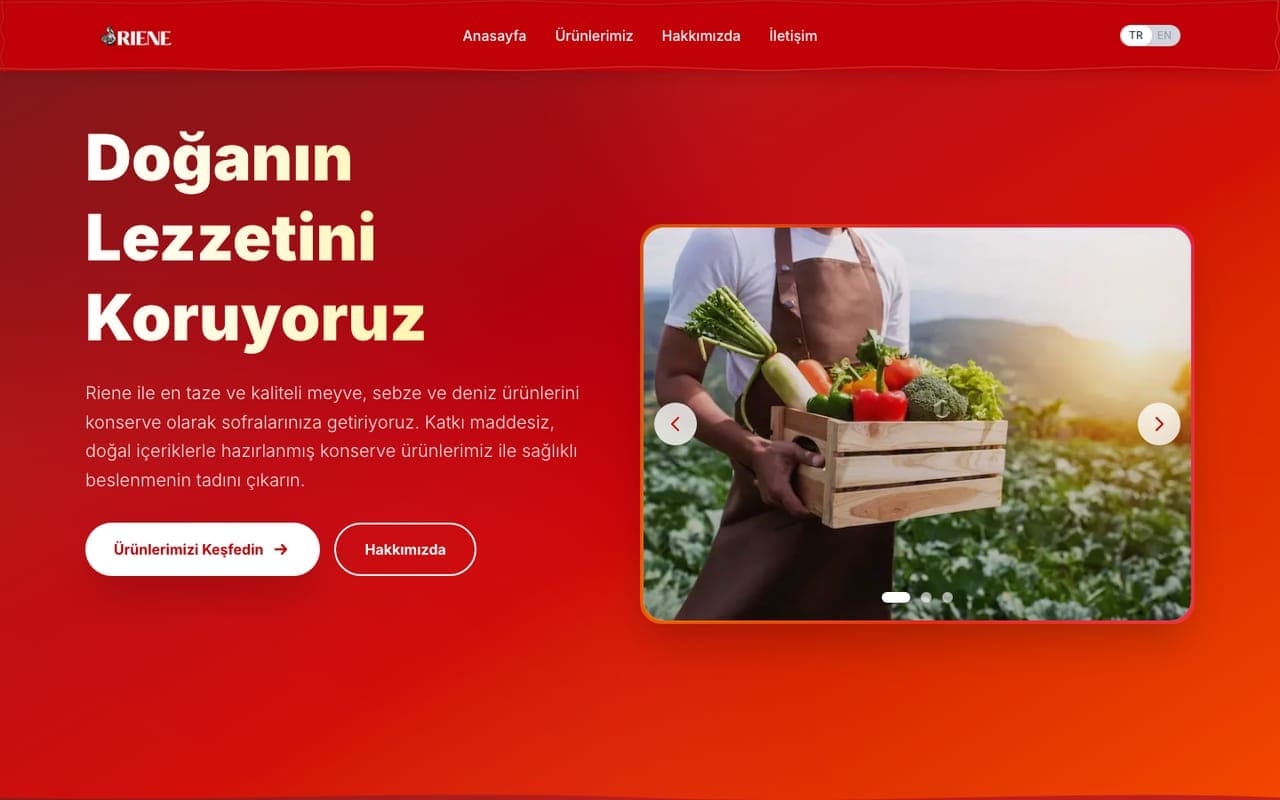
Riene is a live platform we built for a company in the canned food sector; its category is E-Commerce and it uses React and Next.js. It is the direct e-commerce reference on this site, and we do not share order or sales figures. Fergo is a corporate site, not a store, but its product catalogue, dealer login and multilingual structure make it a close example of catalogue logic. Kayram Auto has a large vehicle portfolio, brand and model pages, a budget-based car finder and a quick application flow, and the same portfolio is also live as an iOS and Android app. These examples show how we build catalogue and search structures and carry no claim about sales results.
E-Commerce
Riene
E-Commerce Platform
Riene is a modern e-commerce platform for a company operating in the canned food sector. User-friendly interface and fast performance.
Visit the live site Riene (opens in a new tab)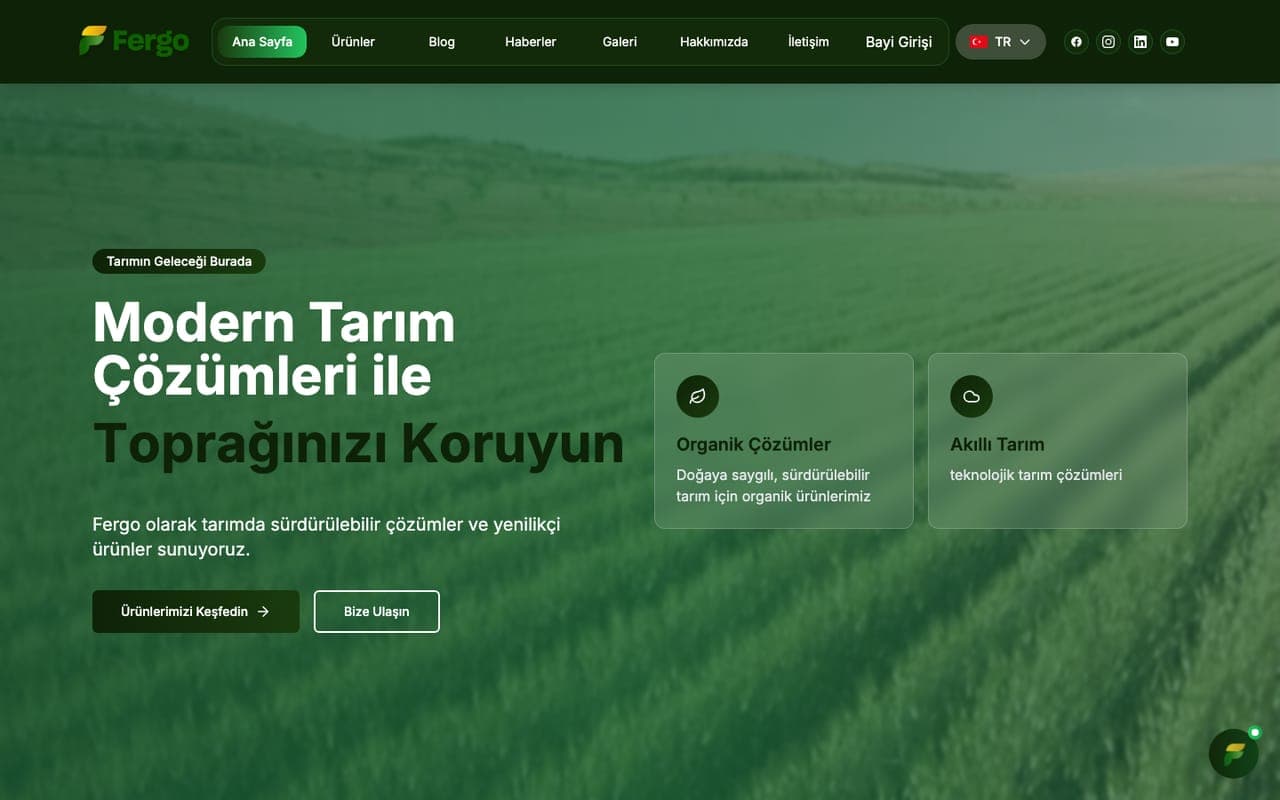
Corporate
Fergo
Corporate Website
Corporate website for Fergo, an organomineral fertiliser producer: product catalogue, blog and news modules, dealer login and a multilingual structure.
Visit the live site Fergo (opens in a new tab)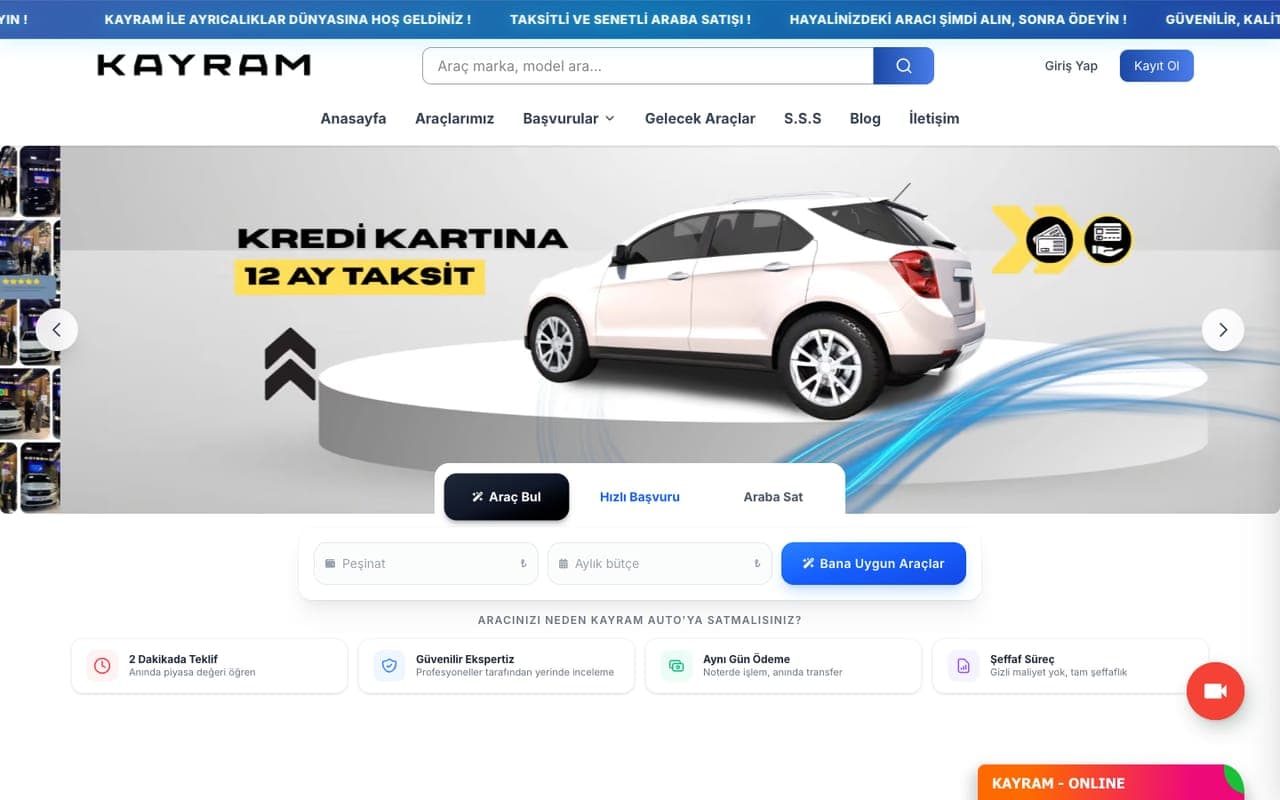
Automotive
Kayram Auto
Car Financing & Sales Platform
Web platform built for Kayram Auto, a dealer selling cars on credit and instalments: a large vehicle portfolio, brand and model pages, budget-based car finder and a quick application flow.
Visit the live site Kayram Auto (opens in a new tab)
Frequently asked questions
What does the cost of an online store depend on?
We do not have a fixed price. The cost is shaped by the platform choice, the number of products and the state of the data, payment methods, integrations with outside systems such as shipping and accounting, whether the design is custom, and extra needs such as B2B or multiple languages. After the initial call we prepare an itemized quote. Running costs such as platform subscription, extension licences and payment commissions are shown separately in the quote.
How long does it take to open the store?
Duration depends on the scope, and we do not give a binding schedule before the scope is clear. How ready your product data is, the payment provider's application and approval process, the integrations and design approvals set the calendar. The length of a provider's approval is not in our hands. Once the scope is settled we share a staged plan.
Should I choose Shopify, WooCommerce or custom software?
If you do not have many special rules or integrations, a ready-made platform is a sensible start for most small stores. Look at your product and variant structure, the payment methods you cannot do without, whether you need an accounting or ERP link, and whether you prefer a monthly fixed cost or a larger up-front investment. The answers often settle the platform on their own. Changing platform later is possible but takes effort, which is why it pays to think it through together at the start.
Which payment systems do you connect?
We integrate payment providers such as Stripe, PayPal, iyzico, PayTR and Paynet, and support credit card, bank transfer, cash on delivery and instalment payments. Which provider is available to your company, and the commission terms, depend on the agreement you make with the provider. We build the integration, test it in test mode and go live together with you.
What do you do to make my store visible on Google?
We shape the title and description structure of product and category pages, structured data, the sitemap, image sizes and speed. That is the technical ground. Writing original product descriptions, category content and regular SEO work are separate effort, handled under our digital marketing service. We do not guarantee rankings.
If I rebuild my existing store, will I lose orders, customer data or rankings?
In a planned move, product, customer and order data can be transferred to the new system; what can be moved and in what form depends on the export options of the current platform, and we check that during discovery. We redirect old product and category addresses to the new ones and suggest watching for errors after launch. Rankings may fluctuate in the first period, and we do not promise a conversion lift.
How are security and legal requirements handled?
Card details are entered in the payment provider's secure area, and we design the store so they are not kept on its own server. We publish the site over HTTPS and protect admin areas with authorisation. Legal texts such as the distance-sales agreement, returns terms, the privacy notice and cookie consent are reviewed and approved by the partner law firm we work with in parallel (included in the package); we place those pages and the consent mechanism in the store.
Can I manage the store myself after launch, and can I get support?
Yes. We give a short walkthrough so you can handle daily work such as adding products, updating prices and stock and managing orders from the admin panel. Maintenance support for updates, security monitoring, bug fixes and new features is optional and written separately in the quote. For custom-built stores, how the source code is handed over, what usage rights you receive and in whose name the domain and accounts sit are settled in writing at the quote and contract stage.
Related services
- Web DevelopmentWe develop fast, secure and scalable web applications with modern technologies.
- Digital Marketing & Business GrowthStrengthen your digital presence and boost sales with SEO, Google Ads, social media management and content marketing.
- ERP & CRM SolutionsManage your business processes on one platform, strengthen customer relationships and increase efficiency with custom ERP and CRM software.